
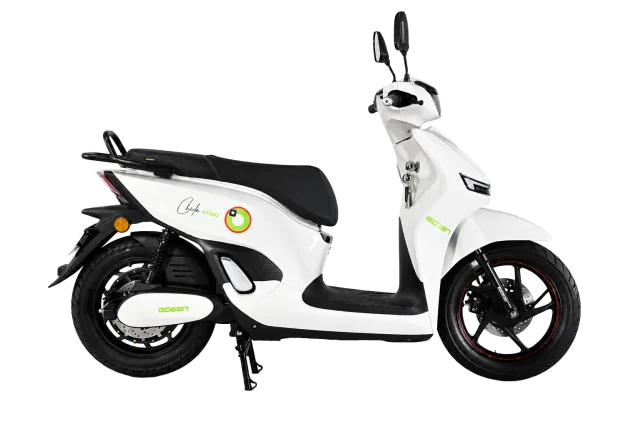

Battery Swapping vs Fast Charging: Which EV Scooter Technology Will Win?
The electric vehicle revolution is gaining momentum, and within this surge electric scooters are carving a niche for themselves. Two competing philosophies race to solve the same problem — how to minimise time spent waiting on a battery.
The case for swapping
Battery swapping stations promise a full 'charge' in under two minutes: ride in, exchange the depleted pack for a charged one, ride out. It suits high-utilisation fleets — delivery riders, rentals — where every idle minute costs money. The trade-off is standardisation and subscription costs, and you never quite own your battery.
The case for fast charging
Fast charging keeps the pack yours. Charge times keep falling — GOEEN's smart chargers complete a full charge in 3.5–5 hours from any home socket, and most owners simply charge overnight like a phone. For the typical commuter who rides 25–40 km a day, downtime is effectively zero.
Who wins?
Probably both, in different niches: swapping for commercial fleets, home charging for private owners. For now, the overnight socket in your own garage remains the cheapest, simplest infrastructure in the country.
Key takeaways
- Swapping trades ownership simplicity for instant turnaround.
- Fast charging keeps the pack yours — and is getting quicker.
- For home-charging commuters, overnight charging already wins.
- The market will likely sustain both models for years.